
There’s a legend that is often repeated about NBA goat, Michael Jordan. In 1990, he was asked about whether or not he would be endorsing a Democrat civil rights activist in his congressional campaign in his home state of North Carolina. His response? “Republicans buy sneakers too.” Which was, obviously, a reference to his shoe brand that still exists today(for those from under their rocks).
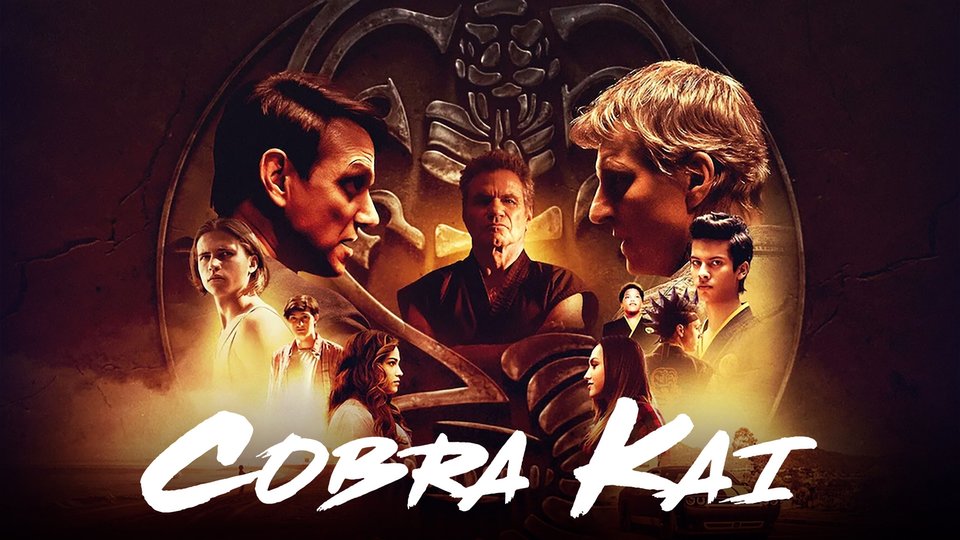
When it comes to Netflix/YouTube Red’s highly discussed (2 weeks out of the year) TV series, Cobra Kai, I kept coming back to MJ’s quote from a time long ago. Season 4 dropped on December 31st, and I felt the need to elucidate my love/hate relationship with the show.
The problem, as is obvious by now, with assessing entertainment in 2022 is to what we are comparing it to. I will not belabor the point other than to simply mention that I do not believe Cobra Kai is an objectively good show. It is annoyingly cheesy at times, a bit condescending, and large portions are poorly acted. The idea of creating a show whose content is aimed at high-schoolers when the franchise itself is more suited for *cough 40-year olds, only underscores the creative bankruptcy of our ‘creative’ class and Hollywood’s willingness to exploit member-berries for cheap views. But all that being said, I like the show.
And the reason I like it is because, for all it’s faults, the big takeaway from Cobra Kai, as you probably know by now, is an honest effort to swim upstream in the woke river of content that floods the entertainment space today.
As mentioned before, Cobra Kai is aimed at High-School students. And what this means is a little different than what this means for other shows. For instance, a current-day Disney Channel show aimed at High-School students is probably more consumable for Elementary or Middle School kids, while Cobra Kai’s aim is to “sound” how a High-School hallway sounds. The topics discussed, the swearing, and, obviously, the violence are things that you would not find in much of today’s High School shows – – (which is ironic because one would expect that the natural progression of edgier and edgier content, combined with the overall attitude of “raging against the machine” of the 80s and 90s would lead to a thinner, and more indistinguishable line between adolescent content and that meant for adults. But it seems it has gone the other direction. Unless it’s their mere inclusion of the great taboos of ‘homosexuality’ and ‘race,’ everything else about current day youth programming is more childish and censored than ever before. Sorry for the tangent.) – – So the fact that Cobra Kai is a show that draws all of it’s lore from a franchise whose last movie came out when today’s High Schoolers’ parents were in Elementary School is a bit clunky, just from the start.
And I would say to “put the target audience aside” to further discuss the show, but you really can’t. Because, throughout the show, you are constantly reminded of “who it’s made for.” This is a constant annoyance of current-year entertainment. I mean, granted, I have rose-colored glasses, but just go re-watch old seasons of Boy Meets World and compare it to the trainwreck that was Girl Meets World. Even if you ignore the overall poor acting and execution of the latter, you can just feel that the general ‘tone’ of the show is dumbed down, simplified, and sterilized to death. And you find that same feeling is present throughout the Disney Channel lineup(yes, I’m aware that BMW was acquired and not Disney in the first place. But I’d even take The Famous Jett Jackson or Even Stevens over today’s sludge).
The reason that all of this matters is because it leads to an identity crisis that I’m not sure Cobra Kai has fully figured out(although season 4 showed progress). It spends far too much of it’s time trying to be a ‘coming-of-age’ show for today’s youth, when the real draw is the redemption story of the show’s main character; Johnny Lawrence.
Rumor has it that the creators of the show based much of the premise of the show on an internet fan theory that circulated about the franchise. That theory asserts that the true villain in the original Karate Kid was actually Danny Larusso (the shows protagonist) and not the kid set up to be the villain; Johnny Lawrence. The theory highlights all the reasons Danny was the bad guy and not Johnny. It details instances of how Danny moves in on Johnny’s girlfriend and antagonizes Johnny throughout the movie despite being painted as a rough and tumble kid trying to make it in a new school. It is a mildly amusing re-writing of the original script but did find some legs among the internet-addicted(as all things do). The fact that many of the themes of this theory actually come out of Johnny’s mouth during the 1st season lend some legitimacy to this rumor. It also sets up a perfect scenario for the redemption story of Johnny Lawrence, which I think many are tuning in for. And they do that part good!
But then there’s…everything else.
Season 2 made a somewhat abrupt turn toward focusing more on the kids and was a little disappointing for me. Don’t get me wrong, the kids are, and I suppose should be, the main focus of the show. It allows them to create and develop new characters as opposed to simply playing 1000% on nostalgia throughout the show. But it does seem to come at the expense of Johnny’s story. Throughout the season, you are forced to sit your adult brain down and put on your kid brain. And you are made to perform this exercise (switching between mature adult modes of thinking to cheesy adolescent thinking) over and over again throughout the series. Needless to say, it becomes a bit distracting. Despite the distraction, the show was able to hook me into both worlds enough to blow me away with the season 2 finale.
And that’s the thing about this show. For all the cringe and poor acting, the writers do enough to suck you in by the end of each episode. You may spend the majority of an episode disinterested or unengaged, but by the end, you want more. You can see what they’re trying to do at times and the effort is what you appreciate; even if they’ve missed the target at times.
Season 3 spent a large amount of time referencing the 2nd movie in the Karate Kid franchise. A movie which saw Danny travel to Japan and have a whole new adventure in his sensei’s home country. I do not remember much from this movie and, thus, felt a bit disconnected from this plot-thread. This, combined with the mind-numbing lives of the high-school kids had me hating every single character by the season’s end; even Johnny. Although I will chalk my disappointment in Johnny’s character up to the unavoidable problem with TV series versus movies when it comes to writing character arcs. In a movie, you can depict a character’s growth and progression at a speed that feels comfortable for the viewer and then it’s over and we are left to believe that the character lived on the rest of his life as a better or changed person from the experiences we saw on screen. Almost always, in a TV series, writers have to either ignore certain parts of character progression, or awkwardly send it backwards in order to drag out the story for more seasons. It’s a nearly impossible task that very few shows have been able to accomplish; Breaking Bad being one of the best ever, IMO.
So, I was not exactly giddy for season 4 when it came out. A friend that knew I watched it asked if I had seen season 4 when he saw mention of it on Twitter. I told him that I might get around to it, but that it wasn’t necessarily at the top of my to-do list. And so, having finally run through all of my excuses to avoid getting back into the gym, I was forced to either start Cobra Kai or dig out my black workout socks. These were 2 un-acceptable choices at the time(a lot like voting). However, I went with the lesser of 2 evils and I was pleasantly surprised! (I was forced to find the socks 2 weeks later and even that has been a good decision)
While the show still(and probably always will) suffers from the Jekyll and Hyde fluctuations in tone, it does a pretty decent job of tackling nuance. Yes, I’m wading into dangerous territory here. The word ‘nuance’ has been exploited and distorted to death by the vapid wokesters in Hollywood, but in this sense, I think it’s appropriate.
I have always, kind of, subscribed to the belief that good art is that which can be interpreted in multiple ways based on the viewer. [This isn’t to say that artists always, or ever, intend or understand this point, but I digress] And there is one, particular, point from the most recent season that resonated with me in a way that I’m sure the creators didn’t intend, and probably few others experienced.
After a semi-reconcilliation between Johnny and Miguel(the show’s teenage protagonist) Johnny has a ‘relapse’ of sorts and passes out drunk on his apartment floor after getting beat to a pulp by the show’s villain, Kreese, and his new partner(from Karate Kid 2), Terry. The relationship between Miguel and Johnny to this point in the show has been that of a mentor/father-figured, with the progression toward father-figure beginning to take a more prominent role; especially with Johnny’s new relationship with Miguel’s mother. Having gone through a great deal of growth throughout the season, Johnny appears to be on a path toward harmony and virtue before the demons from his past creep up and knock him down a peg or two.
After a disappointing prom experience and a fight with his girlfriend(Danny Larusso’s daughter), Miguel goes by to see Johnny, at his apartment, and finds him drunk and on the floor; reeling from his encounter with Kreese where he got his butt kicked. Miguel helps Johnny to bed and we are delivered a heartfelt moment between the two in which Johnny begins to cry whilst explaining to Miguel how hard he tries to do good for him, but doesn’t always do a good job of it. Miguel tells Johnny that he thinks he’s doing a pretty good job and, for the first time in the show, Miguel tells Johnny that he loves him. In his sobbing and drunken stupor, Johnny responds by saying “I love you too, Robby,” calling him the wrong name.
Obviously, this is a devastating blow to Miguel. Robby is the name of Johnny’s biological son whom has a role in the show but has, for the most part, been estranged from his father. Hearing Johnny say the name Robby instead of his own when expressing affection causes Miguel to break down in tears. What he thought was a bonding moment turned out to be a drunk hallucination, or so they would have us believe.
This interaction brought to mind a theory I have had about how some folks’ brains work. In general, when someone uses the wrong name in conversation, we tend to deduce that the person is thinking about the person whose name they used and not the person they are talking to. Obviously, the cliche is when lovers use the wrong name in intimate moments. And, in a sense, this is correct. But I don’t think that the reaction, of taking offense, is always the correct reaction. Because, in some folks’ minds, I think names become titles. Let me explain.
(Rabbit Hole)
My belief, which has been fact-checked: True, is that, for some people, as we live life and encounter people, our brains assign compartments to roles. That is to say that when I encounter discipline, as an example, my brain assigns the feelings that accompany it into a certain compartment. When I encounter brotherly love, it’s given its own compartment, and so on and so on. And, if the brain tends to encounter these feelings repeatedly from the same people, it will assign a label to that compartment. And that label is usually the name of whomever activates that part of the brain.
For instance, let’s say you’re in pre-school. You learn that the person that shows up to teach you every day is named Mrs. McCoy. Everyday she starts the day with a roll call. You interact with her throughout the year and always refer to her as Mrs. McCoy. The next year, when you show up for kindergarten, when your new teacher starts with a roll call, you may, inadvertently, refer to her as Mrs. McCoy, despite the fact that it is not Mrs. McCoy.
In this scenario, which I’m guessing many of us have been through, it is not as if you were longing for your previous teacher. You may not have even been thinking about your previous teacher’s face, or voice, or smell. You may not have even liked her. But your brain had labeled its ‘Teacher’ compartment with a ‘Mrs. McCoy’ sticker, and hearing the roll call had sent it there. But the brain doesn’t replace the label all at once. It erases it with one of those big pink erasers that leaves some of the pencil lead behind and, depending on how hard the first title was written, you can clearly see the indention from the previous names.
As I’m typing this, I’m realizing that it’s not that complicated of a concept, and I’m probably coming off as a bear cub playing with his peter. BUT, I do think this same, very basic, brain process happens for nuanced and ever-changing roles in our lives, and we seem to forget or ignore that. When a person is in love and their brains label that compartment with the name of the person they are in love with. And then the relationship ends. The compartment has the same name on it. And it’s weird to me that, when the next person comes along that makes the person feel that same way, it becomes the end of the world if their brain slips up (usually drunk) and reads the last name on the label. After all, isn’t it every person’s wish to be that person for someone else? Why, then, is it the most heinous offense in the world to call certain people the wrong name? I know this will sound like trolling, but I honestly believe that it should actually be taken as a compliment!
In some cases, I think it is taken as a compliment. If you accidentally refer to a mentor-figure by the name of your deceased dad, chances are, he may feel honored by that, and be moved. But, heaven forbid, you refer to a new girlfriend by an old girlfriend’s name! It’ll be the end of you!
And of course, by now, you’re thinking “this guy sure is going to a lot of trouble to excuse calling out his ex-girlfriend’s name in the sack,” just hold the phones. No, I’ve never made that fatal error, but I have had to catch myself my entire dating career from saying the wrong name. And it never had anything to do with thinking about the other person. I’ve never longed for the person whose name pops into my head. And its alway just the previous girlfriend. It has not been the same name forever. It’s taken 35 years and I’ve learned this about my brain. But explaining it does no good. There’s no doubt in my mind that the next woman I get serious with will illicit the name of my most recent ex despite the fact that it was a bad relationship and I have no lingering feelings. I just know that her name is on the label now(it took 2 1/2 years to get her name written on it).
Now, not everyone’s brains may work this way. Some folks’ brains are very sharp and do a great job of replacing people’s names in their mind. Others were given minds that look a lot like a teenager’s bedroom, and it’s not always their fault. It requires effort for them to flip that switch in their brains, and when they’re drunk, like Johnny was, that step tends to get missed.
(End of Rabbit Hole)
So, when it comes to the scene in Johnny’s bedroom, when Johnny in-advertantly calls his neighbor-boy protege the name of his actual son, I thought Miguel should’ve been honored. Instead, he is crushed. And my biggest annoyance with this is how in the last episode, this leads to Miguel believing that he needs to track down his biological father; which I think is an awful lesson. Because it feels a little like an endorsement of this obsession with identity that we see destroying everything. This whole “I need to know who I am” trope in story-telling has been perverted by today’s idiotic culture.
First-of-all, “learning who you are” is a lifelong endeavor. To claim that, at 17, you are going to go figure it out over a couple days or weeks, is foolishly shallow thinking. And, I know this isn’t just a current trend. After all, Hollywood has never had a shortage of people with a “picked up everything and drove out west to ‘find myself’” story. But to think that you’ve “found yourself” by age 16(or 46 or 66 for that matter) when the history of mankind has really been “man’s attempt to find himself”, to me, is vapid. (This is also one of my issues with Gender Theory, but I’ll spare you of that)
And to think that this desperate “need” for him came as a result of being called the wrong name by his mentor just feels icky.
So, as I said, good art is something that can be taken multiple ways. And Cobra Kai’s attempt at nuance, as damaged as that exercise has become in Hollywood, has led me to appreciate their work; if not, necessarily, always approve of it.
So, as far as my overall thoughts on the show. I like it. It’s not for everybody. It has plenty of flaws, both plot-wise and production-wise. It’s not, exactly, a masterpiece of television drama. And if you’re looking for “pew-pew, CGI, and spandex”, you may not like it either. I have a 38-year-old Marvel Stan friend that hates it. But if you watch the show from the point-of-view that “Republicans by sneakers too” and imagine that the creators were thinking this, you can enjoy it. Don’t get me wrong. It is not a show “for the right” so to speak. But merely a show created with the understanding that the right watches TV too. And it wouldn’t kill us to throw them an occasional bone at times. The humor is good, although far more spaced out than today’s comedy. The themes are meaningful(a switch). And, for me, the presence of optimism might be my biggest draw to the show. In a cynical Hollywood where nihilism seems to be the only constant throughout the land, the presence of old-fashioned optimism is enough to keep me engaged, no matter what the show.
 AgingMillenial