
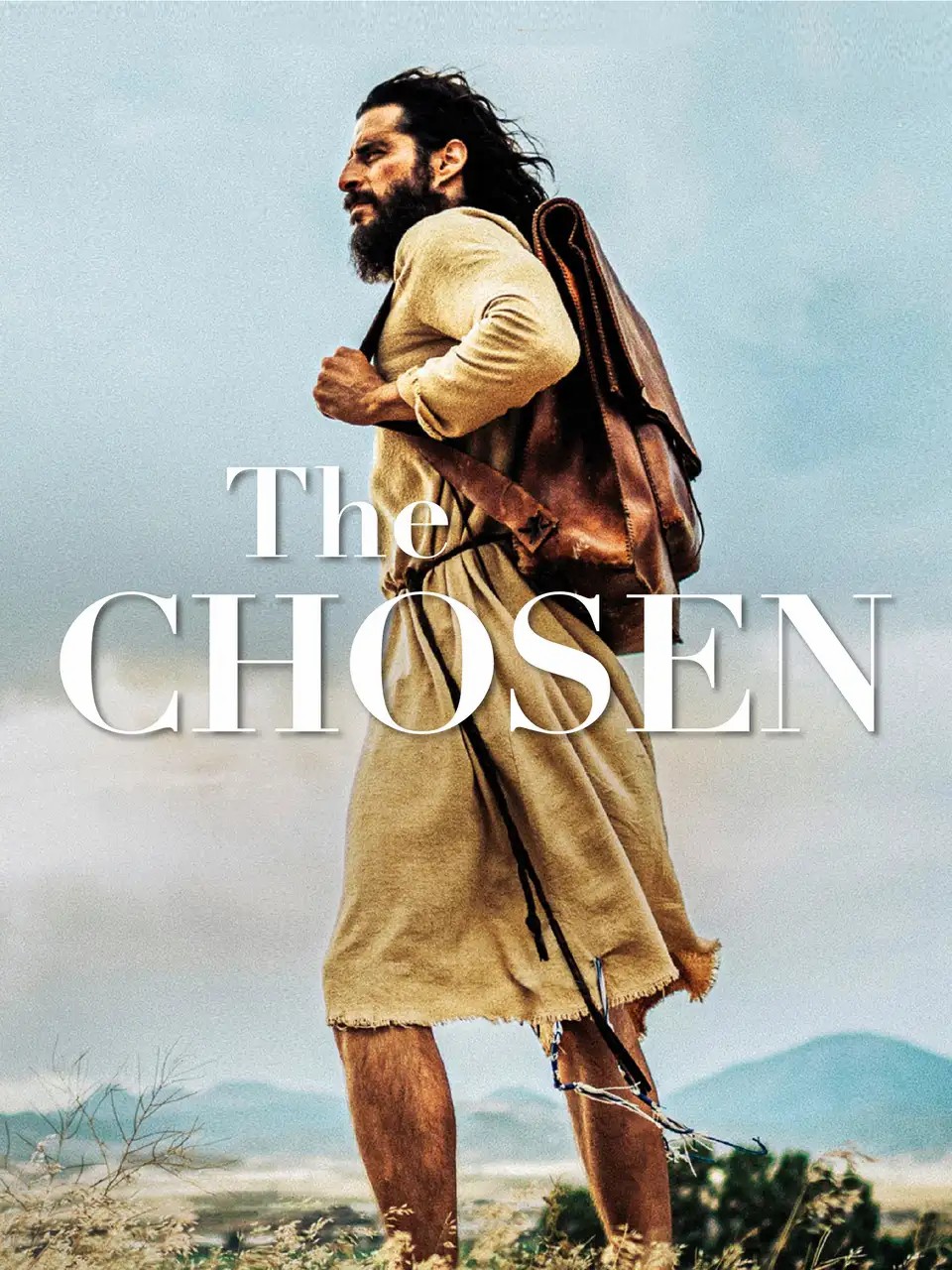
The Chosen
For the older millennials, our choice of Christian entertainment has been a bit of a mixed bag. –Strike that. Our choice of Christian entertainment has been pretty consistently sub-standard. Admittedly, I have not always had a great deal of focus on Christian programming my whole life. Mostly as a kid, growing up, and then no more than the uninterested masses through high-school and most of my adult life; up until a few years ago.
The reasons behind the low quality of Christian entertainment are often speculated on. Many think they are “too preachy”(duh) and let ‘the message’ get in the way of good story-telling. A criticism that a person might consider an inescapable issue at first. “We all know how the story goes,” you might think, and this might leave them hamstrung by the story they are telling. Maybe this is correct. But how many times have we seen Batman’s parents die? And, at a more basic level, how many times have we seen the Messianic figure save the day? Man vs. Best? The Reluctant Hero? Survival? Redemption? Sacrifice? Love? So on and so on.
For my money, I believe every story ever told can be found somewhere within the 66 books of the Old and NEw Testament. And, when pressed, most cinefiles would admit that great cinema is not, as much, about the story being told as ‘how’ the story is told. Simple stories can be told in profound and impactful ways. And, often, complex or subversive stories can be met with contempt from an audience. But that’s a topic for another day.
In terms of Christian programming for the non-devout millennial, our choices are largely restricted to childrens’ programming. In fact, when it comes to adult content of the 90s and early 2000s, very little comes to mind. The only thing that I have any concrete memory of was The Visual Bible, up until we got the fist Left Behind movie in 2000. The Passion of Christ would come out in 2004; giving us, really, the first “big budget” Christian movie that was released in theaters, that I can remember. For the most part, adult Christian entertainment was reserved to a small collection of obscure VHS tapes, perhaps filling up one full shelf at your local library.
As far as kid’s content goes, however, we did have much more selection and quality. (In general, entertainment simply focused more on families, and specifically children, in the 90s) One of the biggest productions I can remember was Disney’s The Prince Of Egypt. For me, this was the first “cartoon” I remember hearing that adults enjoyed, as well as kids. The soundtrack, as with most Disney films, was the best part. The best, of which, would become a hit song for Whitney Houston; ‘When You Believe’.
Beyond that were several kids shows that will likely trigger some rarely visited memories for today’s older millennials. In my part of the World, there was, obviously, the Veggie Tales, a Hanna Barbara show called The Greatest Adventure, a show called Adventures in Odyssey, and, my most memorable, McGee and Me. (Watching him draw a cartoon character that jumped to life off the page likely led to my very short-lived artistic career that came to a tragic end with a 4-H judge destroying my drawing that had been entered into the county fair) Point being, there hasn’t been a great deal of Christian entertainment throughout the life of a millennial.

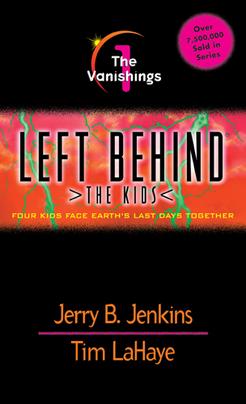
And when it comes to movies, specifically, one thing is for sure; you cannot think about Christian movies without thinking about Kirk Cameron. 8 years after I saw him every day on Growing Pains, he appeared in the, aforementioned, move adaptation of the book series that was sweeping the nation(back when things still ‘swept the nation’), Left Behind: The Movie. They were books about the Tribulation; the time on Earth after Jesus comes back and before the very end of everything. There were, both, adult books, and childrens books, which was kind of cool. The adult versions had their own stories and plots that followed adult characters, while the children’s versions told the story from the teenagers point of view. Kind of spinoffs, written for youth.
As I recall, the books were good. What started out as a handful of adult books ended up becoming 16 Adult books and 52 kids books, with 2 different series; Left Behind: The Kids, and Left Behind: The Young Trib Force. Parallels can certainly be drawn between this book series and any other Fantasy series, especially with the setting being what it was. Needless to say, as I was only a FOMO reader, I did not finish them all (I think I read the first 5 Adult books, and 4 kids books?).
Anyway, while the books were pretty well praised, the movie was not. And Kirk Cameron became a bit of a meme. He went on to do a couple sequels and a few other Christian movies; essentially becoming the face of Christian entertainment. A genre that, kind of, became notorious for low quality, overly dramatic, poorly written, and poorly acted soap operas. And it wasn’t just Cameron movies, but all of them. The bad acting led to cringey emotional scenes, with musical accompaniment that was always way too loud and just always felt like the good of the story was always buried deep below all the bad. And, in general, they were all relegated to ‘straight to DVD’ releases or ‘TV Movies’.

Now, this isn’t to say that American cinema is completely devoid of Christianity. This is the West, afterall. We do stumble upon some Christian themes(I think all themes are Christian themes) from time to time and Mel Gibson’s Passion Of The Christ was a big deal in 2004(althought the focus became more about Mel Gibson than the movie, over time). In 2003 we got Bruce Almighty, which one could say was Christian(although it was much more Jim Carrey than The Almighty), and it was a comedy. That seemed new to me. We were obsessed with comedy in the late 90s/early 2000s, so it made sense. Everything had to be funny. And, while there were certainly some misses, we got quite a bit of good on the comedy front. Mainstays at the box office included the likes of Adam Sandler, Jimmy Carrey, Robin Williams Mike Myers, and Eddie Murphy. We also had the beginnings of Jack Black, Ben Stiller, and Will Ferrell(oh, what a time to be alive). You had your light comedies, the spoof comedies, and the re-emergence of the raunchy comedies. Comedy was king, so it only made sense that we got a quote, unquote, Christian comedy as well.
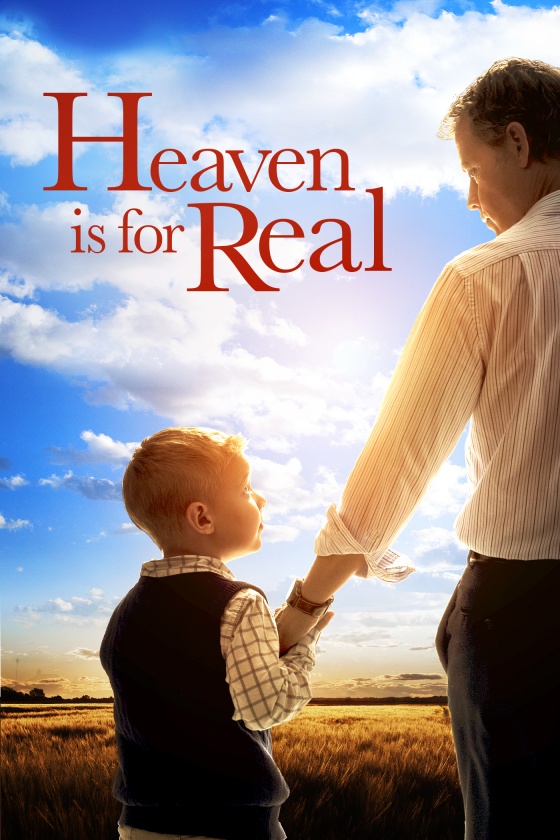
Then we fast forward to 2014. While there was a smattering of well-made Christian cinema in the early aughts, 2014 seemed to be that year we decided to officially give it a seat at the movie genre table. That year we were given Noah, with Russell Crowe, and a remake of 2000s Left Behind, with Nicolas Cage. We also had God’s Not Dead and Heaven is For Real; two movies based on books that saw some honest buzz. I can remember seeing the real-life people, whom Heaven is For Real was based on, making the rounds on all the morning shows. We were also given a great Bible movie, although not a box office movie, called Son of God, with Diogo Morgado. While it may not have generated a terrible amount of buzz, it would be impossible to deny that the film quality within the Christian genre was seeing massive improvement. The actors were better and the production was better; the 2 areas they’d traditionally suffered the most. They’d caught up to the rest of the industry enough to be given a spot in most people’s psyche. Right alongside Action, Horror, and Comedy you have ‘Christian’ to, now, seriously consider when planning you trip to the cinema. At least that’s how it was for people in my camp.

Looking back, it’s weird how, this same year that we were give a spike in quality, Christian entertainment was the same year I gave up on Hollywood at the Theaters. After living a couple years as a film junkie(2 to 3 big screens a week), I started to notice how bad Hollywood products had become. After a stretch of bad movies, that I thought would be good, and a sense that every single “next big thing” Hollywood would do was about race, I became more aware of the talent deficiencies in movie-making. It was only because of the failures in Hollywood, and the race hustling, that even got me to give the superhero genre a chance. And, I think, the same can be said of a lot of folks; we were turned toward superheroes because they were the least bad thing(a lesson many in Hollywood and on YouTube might head).
I mean, I’d seen Iron Man(although not in theaters) and it was ‘better than expected,’ but The Incredible Hulk stunk and Captain America was enough for me to write off the entire craze that was springing up. They were becoming all the rage for the general audience, but for those that considered themselves “fans of the cinema”, I think they regarded them, and their popularity, much like we’d explain the phenomenon of The Jersey Shore; a guilty pleasure. We’d see them but not feel great about ourselves for doing it. In our eyes, that were mindless and shallow “pew-pew” productions meant to pacify the consumption crowd. Batman was really the only superhero any of us had time for. And, if I’m being honest, that assessment wasn’t exactly wrong. It certainly isn’t today.
Anyway, the superhero movie phenomenon is a topic for another day.
Back to the mid 2010s(boy, I’m glad we’re in the 20’s now. A great deal of stress in my life has centered around how to reference the 1st & 2nd decades of the new millennium. Even “the 20s” sounds wrong, but I have faith it will catch on in time). After a great showing in 2014(no matter how mixed the reviews), it took a couple more years and we were given 2 of my current favorites in the Christian genre; The Case for Christ and The Shack. Both were movie adaptations of books, that were better, but they are still good films. Where critiquing Christian entertainment in the past may have been more like evaluating the art of a 2nd grader, where one would merely focus on all the good things, and avoid the bad, in an encouraging tone brought on by low expectations, now you could, at least, sit The Shack up alongside the Jumanji reboot or Blade Runner 2049(2 movies that came out the same year), and compare them fairly. They may still come in last in any comparison, but they did belong. And that brings us to a piece of Christian entertainment that I, not only, think belongs in the list of comparisons, but that, for me, is near the top of that list. That being, The Chosen.

I had little interest in watching The Chosen when I first heard of it. The issue was that I hadn’t heard of it, apparently, until 3 years after it first came out; in 2020. At that same time, Netflix’s Messiah came out as well. I knew that show was awful after seeing 1 episode and, in my laziness, (and if you ask me–justified) I simply chalked The Chosen up as, likely, more blasphemous streaming filler(which is about 95% of entertainment right now). I quickly dismissed it and went on with the rest of my life.
Then, recently, with the release of Jesus Revolution, a friend of mine, that I generally trust in entertainment taste, mentioned wanting to see the movie just cuz he liked the main character from The Chosen; Jonathan Roumie. I remembered hearing decent reviews of Jesus Revolution online, but I was really interested in this other show he’d mentioned. Why was this the 1st he’d mentioned it? I am the cinema snob of our group and waste no opportunity to demonstrate that(something they love to insult me about, and insist on my always being wrong. Pff, Normies). So why, now, am I hearing that he’s been watching this show that I wrote off 3 years ago? Well, I never actually got an answer for that(sorry to waste your time) but I had to hop on his Amazon Prime account and check it out.
The Chosen, for the 1st 3 seasons, covers the story of Jesus as a man. It begins by showing the lives of a couple of his followers prior to Jesus appearing in their lives. Namely; Mary Magdalene, Simon, and Mathew. Fundamentally, they are the focus of the show. Simon Peter is, essentially, the main character(if you were to pick one) with Mary being the co-lead. Of course, Jesus demands quite a bit of attention(and my guess/hope is that he will take on more in the next season), but the differentiator for this show, from so many others that depict the life of Jesus & his followers, is their focus on ‘the followers’.
This is, sort of, an obvious choice for any creative in show business to make. When adapting anything from source material, they tend to choose a path that allows them freedom to insert their artistic vision. With the majority of the gospels being focused on Jesus and his actions, choosing to focus on the followers allows the creators to tell stories that their viewers would have a harder time nitpicking(harder, not impossible). And this is where the Bible purists will, undoubtedly, have have a hard time with the show. If you approach The Chose, or any type of Bible depictions for that matter, with the same approach as any type of ministry; that is that nothing is to be added or taken away, you may not love the show. And I would find no issue with that stance. I, myself, have often viewed Christian entertainment through a similar lens. In fact, it is through that lens that I actually approve of this particular show. For, in my view, the “creative liberties” that one takes with source material should be analyzed with 2 main criteria;
1 – How much does it impact the overall source material(“How much” is the
main point here, as the answer to “if” it does at all will always be ‘yes’.)
2 – How well done are those “creative liberties”? Do they fit the theme? Are they a
message with telling, or are they merely transparent efforts from the
creators to pander to their audience, or “speak to a modern audience” as we
hear today?
(And this is one of the worst things about modern entertainment. It becomes so obvious that they
include content in their projects that is, merely, there to pander to what they believe are their “all new,
all different” audience. Even if this point were to come up in a writers’ room, although it shouldn’t, it
should never be done in a way that is so blatantly obvious. Making modest cultural references is one
thing (and very risky, itself) but nothing takes you out of the story more than tailoring entire
conversations and plot threads around letting you know that “we are reaching our to the modern
audience”. What’s worse is when they proclaim it to the heavens in all of the promotion around the
project. I do not recall ever seeing any of the creators of the 80s and 90s, whether TV, movies, or
books, running around bragging about how they’re created something with the sole focus of “speaking
to a modern audience.” And if the did, I’d imagine they were largely ignored. A good story is good
because it speaks well to the people who recognize its truth. Pandering isn’t, or shouldn’t, be
necessary. It’s “Cringe” as the yout would say. But I digress.)
As for The Chosen, I find that they do quite an acceptable job with their creative liberties. They’re done them in a way that, mostly, builds up and help payoff the major story elements and offers only modest distractions from the overall story. The dangerous line that they’re managed to dance very well, so far, has been their ability to insert comedy into the show.
And to me, this notion would immediately throw up alarm bells. If I were to read any review of a Bible adaptation and see the phrase “The creators have done a good job of injecting comedy into the story of Jesus” or “the show is hilarious,” I would immediately check out. It would only bolster the notion of a show pandering to modern audiences and, likely, not actually be funny; as the reviewer suggests. For that reason, I hesitate to even mention it here. But it can’t be ignored. Because, if I’m(again) being honest, it is a point of concern for me going forward in the show.
While, so far, they have walked the tightrope very well, as with everything, every attempt at comedy in a show or movie is a potential hand grenade that can blow up in your face. And it can, actually, be made worse by the success of 1 or 2 bits that are well executed. Comedy can, then, infect the minds of creators in a way that pushes them to abandon all moderation and can ruin the thing they are doing. It becomes a crutch to fall back on whenever they’re having trouble writing a scene. It can be poison to any project (looking at you, MCU) as the increase in jokes makes each one less effective and becomes so distracting to the point of completely destroying the world you’d built , or were trying to build.
As I said, so far, they’ve done a very good job with it. The jokes aren’t meta or overly nihilistic(redundant, I know) and are sprinkled in sparingly. I hope they continue to exercise restraint and, if anything, err on the side of reduction. As mentioned above, comedy is a hand grenade, and every attempt is a roll of the dice. It’ is very hard to roll double 6s every time.
So, they’ve done well with the levity, but this is only pulled off because of the smashing success at conveying the gravity of the drama. Jonathan Roumie will get much of the praise for this show but, really, his performance is not the one i’m most impressed by. In a way, to act as Jesus is an easier task than any other gig. Jesus was peculiar to us, and we have no real model in which to compare him to. So, convincing an audience (as actors are charged with doing) is easier, as the audience will give you plenty of rope. Jonathan still does a great job, but it is the acting clinic put on by the rest of the cast that really excels the show.
Shahar Isaac, who play Simon Peter, is the standout here. He’s acting his butt off, and it works. He works well with Noah James, who plays Andrew, and with everyone else in the ensemble. Mary Magdalene, played by Elizabeth Tabish, has to be considered the co-lead and she does outstanding as well. The tasteful handling of her character in the show it to be commended as well. It’s hard to accurately portray a “woman of the night” in a family-friendly way. They have a slights struggle with it but, largely, pull it off. Matthew, played by Paras Patel, gets quite a bit of focus in season 3. The handling of his character, although creative, may be my least favorite part of the show. Paras does a great job with it. Other notable performances are those of John The Baptist, played by David Amito, Nicodemus, played by Erick Avari, the ultimate villain voice in Quintus, played by Brandon Potter, and Jesus’ mother Mary, by Vanessa Benavente.
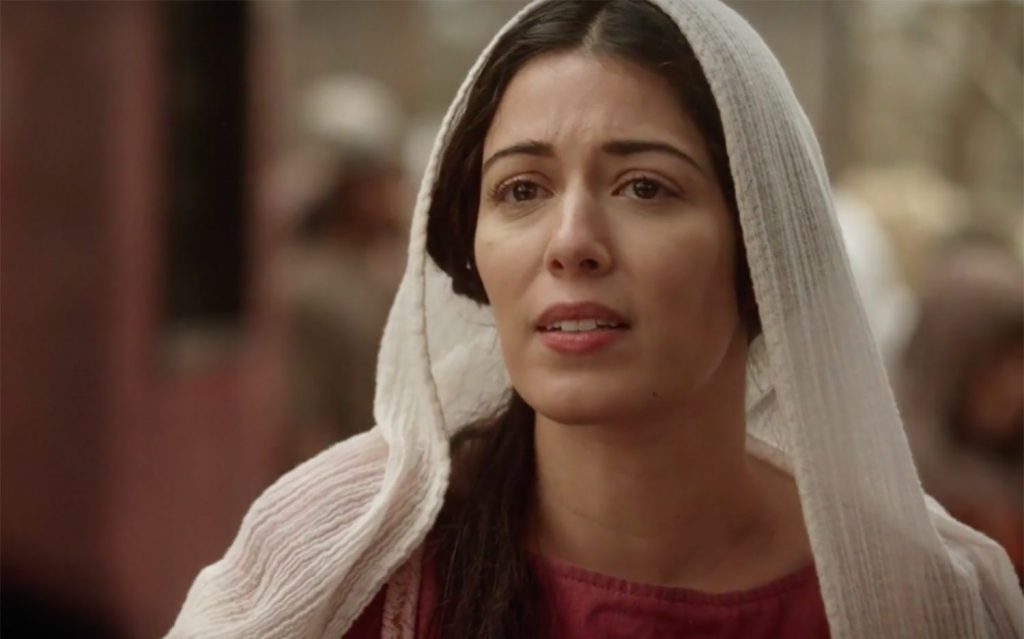
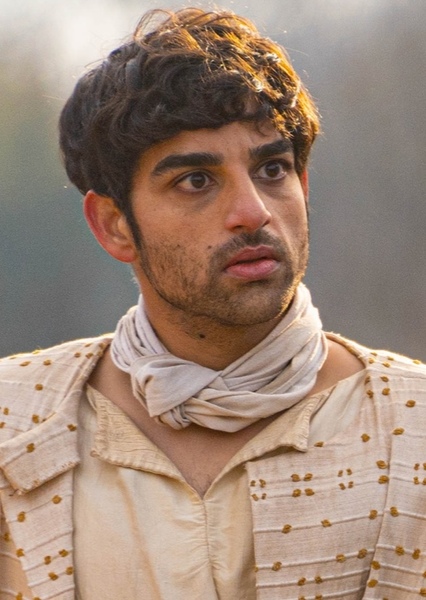
And herein lies some of the brilliance of the show. Their ability to juggle such a large collection of actors is done extremely well. So often, in shows, the attempt to juggle a large roster of characters can tend to result in failures to actually develop any character. And audiences are left with multiple versions of the same generic characters merely doing their part to push the story forward. There can be very little differentiation between characters, or ‘over-the-top’ characterizations that make the viewer question how this group of people could even even communicate, let alone work together in the way the story asks you to believe. The Chosen has done very well in this department, and the result has been a very engaging show that elicits all the emotions, I believe, one is to feel when hearing the story of Jesus. If I were to measure a Drama by the number of lumps I get in my throat while watching it(my equivalent of crying), it would receive the highest possible rating. For me, the impact of the revealed truth in any story is my kryptonite. It almost never fails to well me up inside. Perhaps, due to our desperate starvation and need for it.
And I don’t mean “truth” as in a depiction of true events. Do I believe they are true? Yes. But the truth I’m talking about is the truth about life. Truths about the world and the human experience. I heard an author on a podcast one time(and I can’t frickin find it now) that quoted another historic author in saying(and I paraphrase) “Good fiction is not real, but must be true.” She went on to talk about how, when a story divorces itself too much from the human experience, it loses connection and audiences reject it. I find that to be true(no pun intended). The best fiction is that that touches us, whether it be our sense of wonder, or adventure, or love, or humor, or purpose; whatever the case. In order to touch us, it must be tethered to the true human experience. That’s what makes a good story.
Now, of course, there are certainly those who may not be impressed by a well-made adaptation of great literature. “All the work has been done for them” they might say, “the story is already written, they just have to add the people and cameras.” And I wouldn’t argue a great deal with this belief if only 1– we hadn’t seen this notion fail so much in the past(comic book movies and a great majority of cinematic adaptation of written works) and 2– if there were ever a text one would consider ‘hard to adapt’, it would be the New Testament. There are 4 different gospels in the New Testament; each having been translated from their original language, and the entire collection, having been made subject to centuries of interpretation. So, I can’t join in that particular skepticism.
If I were to hit the show with any critiques(as was inevitable) there would be 2. The first would be their approach to the women. I do feel that the show focuses too much of their time on the “oppression” of women. Nearly every plot-thread involving the women devolves into some type of commentary on “the misogyny” of the era. Here is where I am to give the obligatory concession to the defenders of such a depiction by agreeing that, sure, if ever a perious piece would be given more leash to tell a story of women’s oppression, it would be a time when women were ACTUALLY oppressed. Ok, fine. But we are talking about a time when the idea of ‘misogyny’ didn’t really exist. Women were given a different mantle to carry by Jesus, but still nowhere near the role argued about today. Mary Magdalene, certainly, couldn’t have lived out her role in the Jesus story being consumed by the thought of her oppression and need to “shatter the glass ceiling” in the way the show tends to depict in its later episodes. It comes off as more of that ‘pandering’ mentioned earlier, and distracts, ever so slightly, from the story. Especially when so much screen time is given to it.
My 2nd critique would be the character of Matthew. What started out as a intriguing decision to depict Matthew, who may have been described as “odd” by scholars(maybe?), as a type of idiot savant, if not with a touch of autistic tendencies, devolves into a character slightly decipherable from Rain Man. This depiction, again, becomes distracting and is given way too much attention. At times, it feels as if the creators are definitively trying to tell the story of how an autistic man navigated the world in the 1st century. Not only does it infringe on the line of “reading too much into” the interpretations of Matthew by scholars, but it also falls into the pile of pandering to modern sensibilities that kneecaps so much of today’s entertainment.
In all, I give the show 5 stars, or 10 stars, 2 thumbs, whichever seal of approval you prefer. It smacks you in the face with the timeless truths Jesus brought to the Earth. Truths that have never, effectively, been refuted today. Not by science, or world leaders, or internet edge lords. Its done in a way that can stir the deepest and most buried emotions of even the most strident cynic, if given the chance. I am tempted to say that “even if you hate the message, you cannot dispute the quality of entertainment you are getting(and I do believe that to be objectively true), but I wouldn’t want to give the appearance of me shying away from the message. Because the effectiveness of THIS message is that it IS truth. Whereas criticism of today’s entertainment tends to focus on the perpetuation of “The Message” over good story-telling. My view is simply that “The Message” isn’t true. If it were, no one would complain. They think they would, but they wouldn’t. When the message is true, it stirs a person’s soul. And “The Message” in The Chosen is The Truth.
 AgingMillenial